Church attendance tracking is more than a headcount. It's often the earliest signal that someone is starting to disengage, and it feeds into decisions about space, staffing, and how ministries are sized. How that data gets collected makes a bigger difference than most churches expect, and the gap between manual and automated methods is wider than it looks.
What manual tracking actually costs
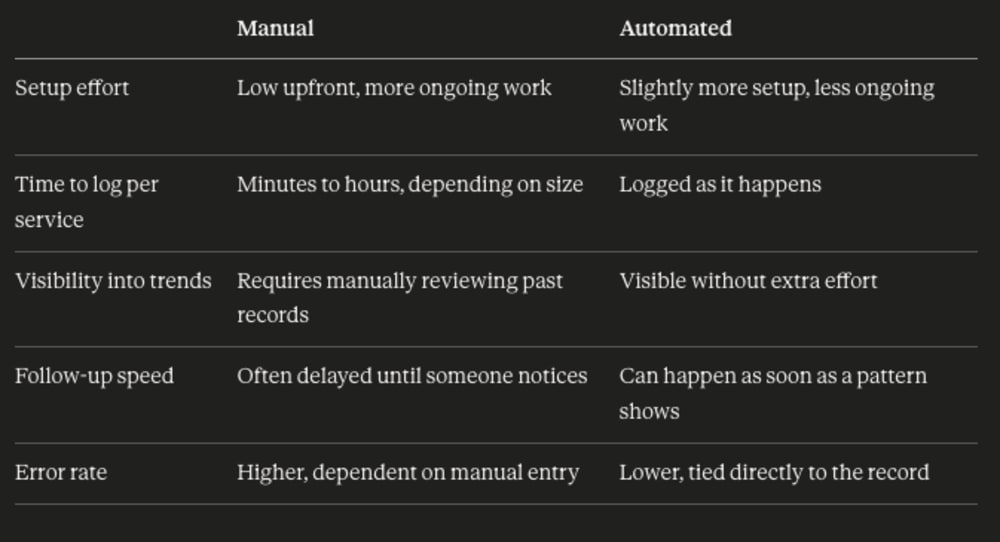
A paper sign-in sheet, or a spreadsheet updated after the service, works fine in the moment. The cost shows up later. There's usually a delay between when attendance happens and when anyone actually looks at the data, and that delay is exactly what lets a drop-off pattern hide until it's no longer a small thing. This is the same root problem behind most of the signs a church has outgrown spreadsheets more broadly, attendance is just the version that's easiest to miss.
What automated tracking changes
When attendance is logged at the point of service and tied directly to a member's profile, the pattern is visible without anyone doing extra work to find it. Nobody has to remember to update a spreadsheet, and nobody has to notice a gap on their own, the data is just there when leadership needs it.
A simple comparison
When it's worth switching
Not every church needs this on day one. A small church where the pastor personally knows if someone's missing may not feel the gap yet. It's worth switching once you're past the size where you can track that by memory, or once follow-up is consistently happening later than you'd like. There's no fixed member count where this becomes necessary, it's more about whether anyone can still hold the full picture in their head.
What to look for in an automated system
Not every automated option adds real value. A system that only digitizes the same manual process, entering names into an app instead of a notebook, doesn't solve the underlying delay problem. The meaningful shift is when attendance ties directly to a member's ongoing record automatically, so trends surface without anyone running a report.
It's also worth checking whether the system separates attendance by service or event type. A single combined number tells you less than knowing, for example, that first-service attendance is steady while a midweek gathering is quietly shrinking. That level of detail is usually where the real decisions get made.
What churches ask before they switch
Do we need to buy hardware? No. Check-in runs from a link you generate for each service, which people open on the phones they already carry. You can leave that link open for the whole service or let it close itself once the service ends. There is no scanner to buy, though you can stand a shared tablet or laptop at the door and let the same link act as a kiosk, resetting itself for the next person.
What about members who do not use a smartphone? Someone on the team still marks them present. Recording a service and ticking names by hand stays available alongside the link, so one steward with a phone can cover a whole row of people who do not have one. Manual and automated are not a single choice you make for everybody at once.
Can we bring our history with us? Your member list, yes, there is an import for that. Historical attendance, no. Registers from previous years stay where they are, and the new record starts from your first service on the system. That is worth knowing before you pick a date, because the cleanest moment to switch is the start of a term or a year rather than the middle of one.
How Flock handles it
Flock's attendance module logs attendance per service and ties it to each member's profile automatically, so the pattern is there when you need it, not buried in a spreadsheet from three months ago. It's included on every plan, including the free tier, details on our pricing page.
Start free and see how it works for your church.